

 Runbase Team
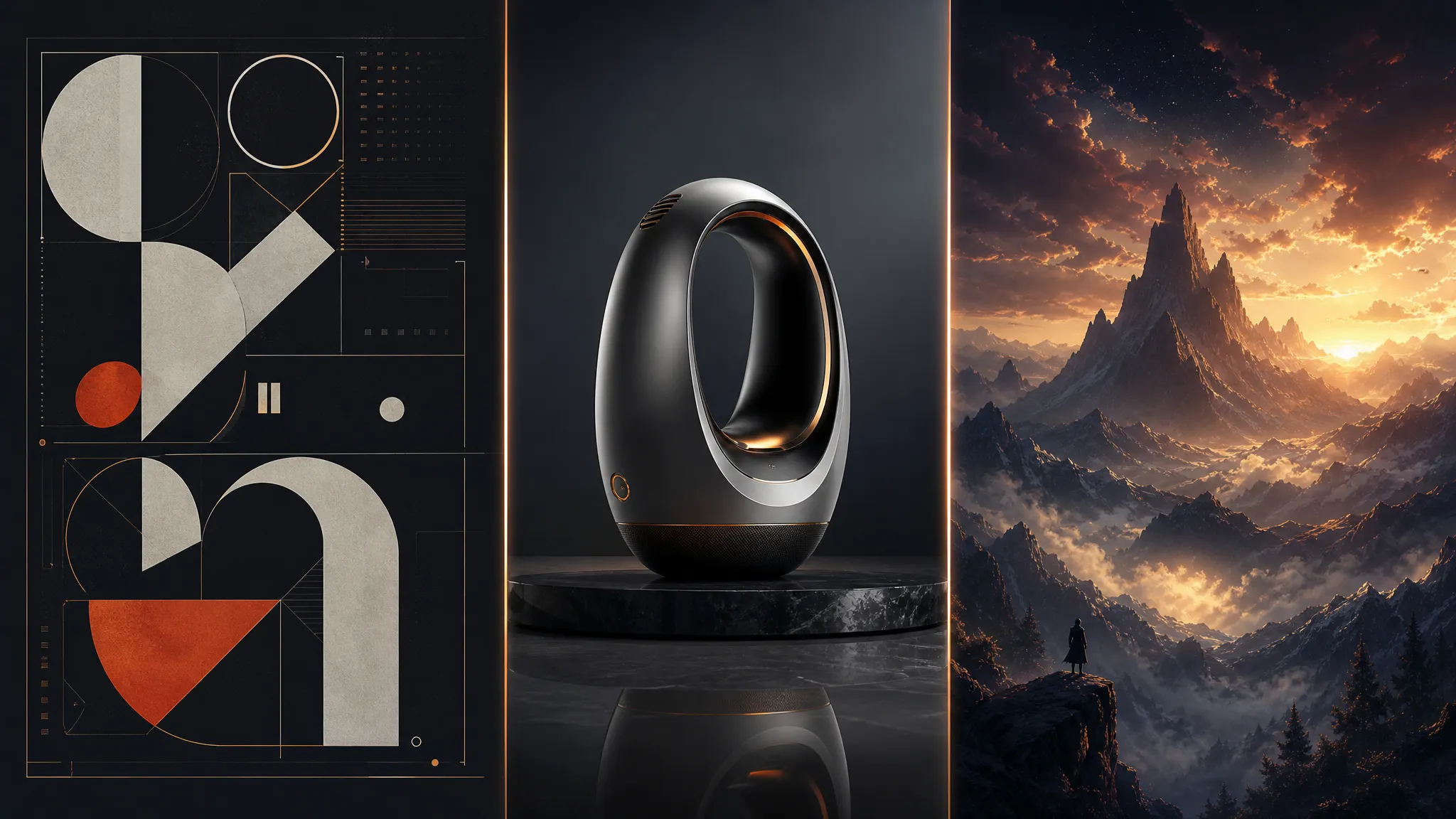
Ideogram 4.0 leads text rendering (0.97 OCR score) and ships open weights at 9.3B parameters. GPT Image 2 wins on prompt accuracy and ease of use. Midjourney remains the aesthetic benchmark. The right choice depends on your use case — most professionals use two or all three.
| Feature | Ideogram 4.0 | GPT Image 2 | Midjourney v7 |
|---|---|---|---|
| Parameters | 9.3B (open weight) | Undisclosed (closed) | Undisclosed (closed) |
| Max Resolution | 2048×2048 native | 4096×4096 | 2048×2048 |
| Text Rendering (OCR) | 0.97 (X-Omni) | ~0.93 | ~0.35 |
| API Price (per image) | $0.03–$0.10 | $0.02–$0.19 | No official API |
| Open Weights | Yes (non-commercial) | No | No |
What Makes Each Model Different?
Ideogram 4.0: The Typography Specialist
Ideogram 4.0 is a 9.3-billion-parameter diffusion transformer released on June 3, 2026 — the first open-weight text-to-image model trained from scratch with structured JSON prompting. Where other models treat text rendering as an afterthought, Ideogram makes it the centerpiece. It uses Qwen3-VL-8B as its text encoder instead of CLIP or T5, extracting multi-scale semantic features across 13 intermediate layers. The result: posters, signage, product packaging, and any design requiring accurate embedded text come out readable on the first try. In the ContraLabs blind typography evaluation, professional designers picked Ideogram 4.0 as the best output 47.9% of the time — more than double any competitor.
GPT Image 2: The All-Rounder
GPT Image 2 is OpenAI's flagship image generation model, released in April 2026. It's the first image model with built-in reasoning — it plans composition, verifies prompt constraints, and self-corrects before generating. You describe what you want in plain language, and it delivers. No Discord, no parameters, no JSON. It supports up to 4K output, reference-guided editing with up to 4 input images, and multilingual text rendering across CJK, Hindi, and Bengali scripts. For teams already inside the OpenAI ecosystem, GPT Image 2 is the path of least resistance.
Midjourney v7: The Aesthetic Benchmark
Midjourney remains the undisputed leader in artistic quality. Gallery-worthy portraits, cinematic environments, and stylistic depth that competitors consistently fail to match. Midjourney v7 (and the v8 Alpha launched March 2026) produces images that look intentional rather than generated. The tradeoff: text rendering is unreliable (~30–40% accuracy), there's no official API, and the Discord-based workflow is a barrier for teams building automated pipelines.
Text Rendering: Who Gets the Words Right?
Text rendering is the dimension where these three models diverge the most.
Ideogram 4.0 scores 0.97 on the X-Omni English OCR benchmark — meaning nearly every letter, number, and glyph in a generated image is correct and legible. Multi-line text, varied font weights, logos, signage, and even dense paragraphs are handled reliably. Its structured JSON prompting system lets you specify exact text strings, bounding-box positions, and per-element styling — a level of typographic control that is unique among all image generation models in 2026.
GPT Image 2 made a significant leap from GPT Image 1. Logos, product labels, and styled lettering now render legibly. It's a solid second choice for text-heavy images, and for common cases — a product shot with a short headline, an infographic title — the quality is good enough.
Midjourney v7 still struggles. Short words on prominent signs sometimes work; anything beyond that is a gamble. If your image needs readable text, Midjourney is not the tool.
Best for text: Ideogram 4.0 — by a wide margin.
Image Quality and Photorealism
Midjourney v7 leads here and it's not close. The model produces images with a distinctive aesthetic quality — lighting that feels cinematic, compositions that feel deliberate, materials that feel tactile. Whether you're generating editorial portraits, fantasy environments, architectural visualizations, or abstract concepts, Midjourney consistently delivers the kind of images you'd put in a portfolio.
GPT Image 2 has strong photorealism, particularly for product photography, editorial work, and scenes requiring accurate lighting and materials. It's not as stylistically distinctive as Midjourney, but it's reliable and versatile. The built-in reasoning helps with complex multi-element scenes where spatial relationships matter.
Ideogram 4.0 produces clean, professional images — especially strong for design-oriented output like posters, social graphics, and branding materials. On the DesignArena leaderboard, it ranks first among all open-weight models and ninth overall. For design tasks it excels; for fine-art or cinematic photorealism, it trails Midjourney and GPT Image 2.
Best for aesthetics: Midjourney v7. Best for design output: Ideogram 4.0.
Prompt Adherence and Control
GPT Image 2 leads prompt accuracy. Its built-in reasoning interprets complex, multi-constraint prompts more faithfully than models that process prompts as raw text embeddings. Describe a scene with five objects, specific spatial relationships, and style constraints — GPT Image 2 will attempt to satisfy each one.
Ideogram 4.0 takes a different approach: structured JSON prompting. Instead of describing everything in natural language, you specify bounding boxes (normalized 0–1000 coordinates), a hex color palette (up to 16 colors), and separate text elements with independent styling. For layout-critical work — magazine covers, advertisements, multi-element posters — this gives more precise control than any natural-language prompt. The tradeoff is a steeper learning curve, though the Magic Prompt feature can auto-convert plain text to structured JSON.
Midjourney v7's prompt handling is competent for single-subject, style-focused generations. Complex multi-element scenes are less reliable. Midjourney compensates with parameters like --style, --chaos, and --stylize that give artistic control over mood and rendering.
Best for natural-language prompts: GPT Image 2. Best for layout-precise work: Ideogram 4.0.
Speed and Throughput
| Model | Turbo / Fast | Default | Quality / HD |
|---|---|---|---|
| Ideogram 4.0 (API) | ~5s | ~15s | ~30s |
| GPT Image 2 (API) | — | ~10–15s | ~20–30s |
| Midjourney v7 | ~15s (Turbo) | ~30s (Fast) | ~60s (Relax) |
For high-volume production — e-commerce catalogs, social media batches, automated pipelines — Ideogram 4.0's turbo mode and GPT Image 2 offer the fastest throughput via API. Midjourney's Discord-based workflow introduces manual friction that makes it impractical for production at scale.
For local deployment, Ideogram 4.0's NF4 checkpoint runs on a single 24GB GPU. Using the 12-step turbo mode, you can generate images in under 90 seconds. ComfyUI supports Ideogram 4.0 natively with pre-built workflows. No other model in this comparison offers local inference.
Pricing Breakdown
| Ideogram 4.0 | GPT Image 2 | Midjourney v7 | |
|---|---|---|---|
| API (per image) | $0.03 Turbo / $0.06 Default / $0.10 Quality | ~$0.02 low-res / $0.07 standard / $0.19 HD | No official API |
| Subscription | Free: 10 slow/week. Plus: $15/mo. Pro: $42/mo | Included in ChatGPT Plus ($20/mo) | Standard: $10/mo. Pro: $30/mo |
| Self-hosted | Yes (open weights, non-commercial free) | No | No |
| Commercial license | Separate paid license required | Included | Included with paid plans |
For API-first workflows, Ideogram 4.0 offers the most transparent and competitive per-image pricing. GPT Image 2's effective cost depends on which OpenAI tier you're on. Midjourney has no API — third-party wrappers exist but violate their Terms of Service.
If you're evaluating AI image APIs beyond these three, our comparison of the best fal.ai alternatives covers additional options including pricing and reliability data.
API Quick Start
Ideogram 4.0
curl -X POST "https://api.ideogram.ai/api/v1/images/generations" \
  -H "Authorization: Bearer $IDEOGRAM_API_KEY" \
  -H "Content-Type: application/json" \
  -d '{
    "prompt": "A minimalist coffee shop logo with the text \"BREW LAB\" in serif font",
    "model": "V_4",
    "rendering_speed": "DEFAULT"
  }'
Ideogram's API also supports structured JSON prompting with bounding boxes and color palettes. Open weights are available on HuggingFace in FP8 and NF4 formats for local deployment.
GPT Image 2
curl -X POST "https://api.openai.com/v1/images/generations" \
  -H "Authorization: Bearer $OPENAI_API_KEY" \
  -H "Content-Type: application/json" \
  -d '{
    "model": "gpt-image-2",
    "prompt": "A minimalist coffee shop logo with the text \"BREW LAB\" in serif font",
    "size": "1024x1024",
    "quality": "standard"
  }'
GPT Image 2 benefits from OpenAI's mature SDK ecosystem — official Python and Node.js libraries, extensive documentation, and direct integration with ChatGPT for iterative conversational editing.
Midjourney
/imagine A minimalist coffee shop logo with the text "BREW LAB" in serif fontNo REST API. Interaction happens through Discord commands or the Midjourney web UI. This makes Midjourney impractical for automated production pipelines.
Running Ideogram 4.0 Locally with ComfyUI
Ideogram 4.0 is the only model in this comparison that you can run on your own hardware. ComfyUI added native support on day zero, with pre-built workflows ready to go.
Hardware Requirements
- Recommended: 32GB VRAM for full-speed 2K generation
- Minimum: 16GB VRAM + 32GB system RAM with the FP8 checkpoint — generates a 48-step image in about 5 minutes, or under 90 seconds with the 12-step turbo option
- Budget option: The NF4 checkpoint fits on a single 24GB GPU (e.g., RTX 4090)
Setup
Update ComfyUI to version 0.24.0 or later, then download the model files from HuggingFace into the following directory structure:
ComfyUI/models/
├── diffusion_models/
│   ├── ideogram4_fp8_scaled.safetensors
│   └── ideogram4_unconditional_fp8_scaled.safetensors
├── text_encoders/
│   └── qwen3vl_8b_fp8_scaled.safetensors
└── vae/
    └── flux2-vae.safetensors
The diffusion model handles core image generation. The Qwen3-VL encoder is what gives Ideogram 4.0 its text rendering advantage — it's a full vision-language model, not a simple CLIP encoder. The Flux2 VAE handles image decoding. There's also an optional Gemma 4 text encoder (gemma4_e4b_it_fp8_scaled.safetensors) that enables more natural plain-text prompting if you prefer not to write JSON.
Using the Workflow
Download the official Ideogram 4 ComfyUI workflow (a .json file) and drag it into the ComfyUI interface. All nodes will auto-arrange. If any custom nodes are missing, install them through ComfyUI Manager.
Plain-text prompts work out of the box. For structured JSON prompts — with bounding boxes, color palettes, and per-element text styling — install the KJNodes package, which includes an Ideogram 4 Prompt Builder node that makes composing JSON prompts visual rather than manual.
Why This Matters
Self-hosting means no per-image API cost (after the one-time hardware investment), full data privacy, and the ability to fine-tune the model on your own assets. For studios generating thousands of images per month, the economics shift heavily in favor of local deployment. Neither GPT Image 2 nor Midjourney offer this option.
Which Model for Which Job?
| Your Use Case | Best Choice | Why |
|---|---|---|
| Poster / banner design | Ideogram 4.0 | Native 2K, accurate text, bounding-box layout control |
| Product photography | GPT Image 2 | Realistic lighting, reference-guided editing |
| Social media graphics | Ideogram 4.0 | Text-heavy designs render correctly on the first try |
| Editorial / artistic content | Midjourney v7 | Unmatched aesthetic quality and stylistic depth |
| E-commerce catalogs (bulk) | GPT Image 2 or Ideogram 4.0 | API access enables automation |
| Developer integration | Ideogram 4.0 or GPT Image 2 | Both offer REST APIs with competitive pricing |
| Logo and branding | Ideogram 4.0 | Typography accuracy + native transparent background |
| Concept art / storyboards | Midjourney v7 | Cinematic quality, strong compositional instinct |
| Local / offline deployment | Ideogram 4.0 | Only option with open weights (NF4 fits 24GB VRAM) |
Frequently Asked Questions
Is Ideogram 4.0 free to use?
Ideogram 4.0 offers a free tier with 10 slow-generation credits per week on ideogram.ai. The open weights can be downloaded from HuggingFace and run locally for free, but only for non-commercial use. Commercial deployment requires a separate paid license.
Can Ideogram 4.0 replace Midjourney?
For design-focused work — posters, branding, social graphics, anything requiring accurate text — yes, Ideogram 4.0 is likely the better choice. For fine-art, editorial photography, and content where pure aesthetic quality matters most, Midjourney is still ahead.
Does GPT Image 2 support text rendering?
Yes. GPT Image 2 made a major improvement compared to GPT Image 1. Logos, labels, and short headlines now render legibly. It still falls short of Ideogram 4.0 for dense text, multi-line layouts, or precise typographic control.
Which model has the best API for developers?
GPT Image 2 has the most mature SDK ecosystem with official Python and Node.js libraries. Ideogram 4.0 has a clean REST API with the lowest per-image pricing ($0.03 turbo) and the additional option of self-hosting via open weights. Midjourney has no official API.
Can I run Ideogram 4.0 on my own hardware?
Yes. The NF4 checkpoint fits on a single 24GB GPU (e.g., RTX 4090). With the 12-step turbo mode, generation takes under 90 seconds per image. ComfyUI supports it natively with ready-made workflows.
How does Ideogram 4.0 compare to Google's Nano Banana 2?
Nano Banana 2 competes with GPT Image 2 in the closed-model space — strong general-purpose generation with good text rendering. Ideogram 4.0 occupies a different niche: open-weight, specialized in typography, and offering structured JSON control. If text accuracy is critical, Ideogram 4.0 complements rather than replaces Nano Banana 2.
Should I use one model or multiple?
Multiple. The professional consensus in 2026 is a multi-model stack: Midjourney for quality-first generation, GPT Image 2 for general-purpose reliability, and Ideogram 4.0 for text-critical and layout-precise work. Let each model do what it does best.
The Verdict: Use the Right Tool for Each Job
There is no single "best" AI image generator in 2026 — and that's a good thing. The market has matured past one-tool-fits-all.
Ideogram 4.0 is the typography and design specialist. If your output needs readable text, structured layouts, or brand-consistent color palettes, start here. The open weights and competitive API pricing make it especially attractive for teams that want control over their inference stack.
GPT Image 2 is the reliable all-rounder. Strongest prompt adherence, easiest integration, and the convenience of ChatGPT for iterative editing. If you need one API to cover most cases, this is the safe default.
Midjourney v7 is the artist. When the image needs to look stunning and text doesn't matter, nothing else comes close.
The smartest approach: route each task to the model built for it, rather than forcing one model to do everything adequately.